If you look out your window in Seattle or Federal Way right now, you might see a few confusing signs. One day, the sun breaks through, teasing us with what feels like early Spring. The next day, the gray returns, the temperature drops, and the drizzle restarts.
Welcome to February in the Pacific Northwest.
This transition period – between the dark, storm-heavy days of January and the true arrival of Spring – is actually one of the most critical times for your home’s exterior. Your roof has just survived the “halftime show” of winter. It has battled windstorms, perhaps some freezing temperatures, and relentless moisture.
Now, as the days start to get just a little bit longer, is the moment when problems become visible. That slight green fuzz on your shingles is turning into thick moss. The gutters might be sagging under the weight of wet debris. And you might be wondering: Did my roof make it through unscathed?
At Roofscapes NW, we believe in proactive care. Catching a small issue in February can save you thousands of dollars in repairs come April. Here is your comprehensive guide to assessing your roof’s health right now and preparing for the season ahead.
The Number One February Villain: Moss and Algae
If there is one thing that unites homeowners from King County to Pierce County in February, it is the battle against the green. The wet, cool, and relatively dark conditions of the last three months have created the perfect laboratory for Gloeocapsa magma (algae) and thick moss to thrive.
You might think moss is just a cosmetic issue – a rustic “Pacific Northwest charm.” It is not.
Why Moss Destroys Roofs
Moss has a root system. As it grows on asphalt shingles, those tiny roots work their way under the edges of the shingles and into the granules.
- Lifting Shingles: As the moss expands, it physically lifts the shingle up. This breaks the wind seal, making your roof highly susceptible to the next windstorm.
- Trapping Moisture: Moss acts like a sponge. It holds water against the surface of your roof long after the rain stops. This constant saturation accelerates the breakdown of the asphalt and rots the wood deck underneath.
- Frost Damage: When temperatures drop near freezing (which still happens frequently in February), the water trapped in the moss freezes and expands, cracking the shingles.
The “Do Not” Rule of February
When homeowners see moss, their instinct is often to blast it away. Please, do not pressure wash your roof.
Pressure washing, especially on an aging roof, strips away the protective granules that shield your home from UV rays and rain. It can strip 5 to 10 years of life off your roof in a single afternoon.
The Roofscapes NW Solution
If your roof is looking like a forest floor this month, you need a gentle, chemical treatment. We use specialized solutions that kill the moss at the root without damaging the integrity of the shingle. Once the moss dies (turning white or brown), it naturally weathers off or can be gently brushed away.
The “Silent” Leak: Attic Condensation
February is often the month of “phantom leaks.” You might see a damp spot on your ceiling, but when you look at the roof outside, the shingles seem fine.
In many Seattle homes, the issue isn’t rain getting in – it’s moisture failing to get out.
We are currently in a cycle of thermal fluctuation. You are heating your home to keep warm, creating warm, moist air (from showers, cooking, and breathing). If your attic lacks proper ventilation (intake at the eaves, exhaust at the ridge), that warm air gets trapped. When it hits the cold underside of the roof deck, it condenses into water droplets.
This is called attic rain. It can soak your insulation, breed mold, and rot your rafters.
The Fix: During a Roofscapes NW inspection, we don’t just look at shingles. We calculate your ventilation ratio. Sometimes, the solution isn’t a new roof, but simply adding intake vents or clearing insulation that is blocking your soffits.
Assessing Storm Damage: The “Winter Hangover”
January usually brings the strongest winds of the year to the Puget Sound. Now that the dust has settled, take a walk around the perimeter of your home (safety first – stay on the ground!).
Look for these “Winter Hangover” signs:
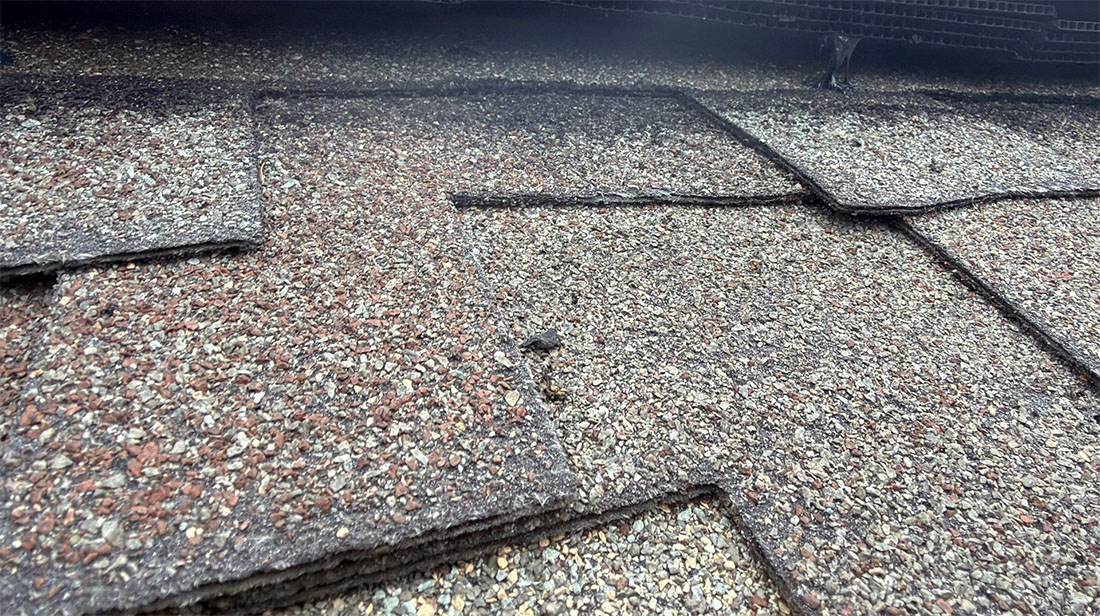
- The Glitter Effect: Look at your downspout splash blocks. Do you see a pile of black granules that looks like glitter or wet sand? That is the protective coating of your shingles washing away. Excessive granule loss in February is a sign your roof is nearing the end of its life.
- The Missing Tooth: Look up at your ridge lines and the edges of the roof. Are there dark gaps where shingles used to be? Wind damage often happens at the edges first.
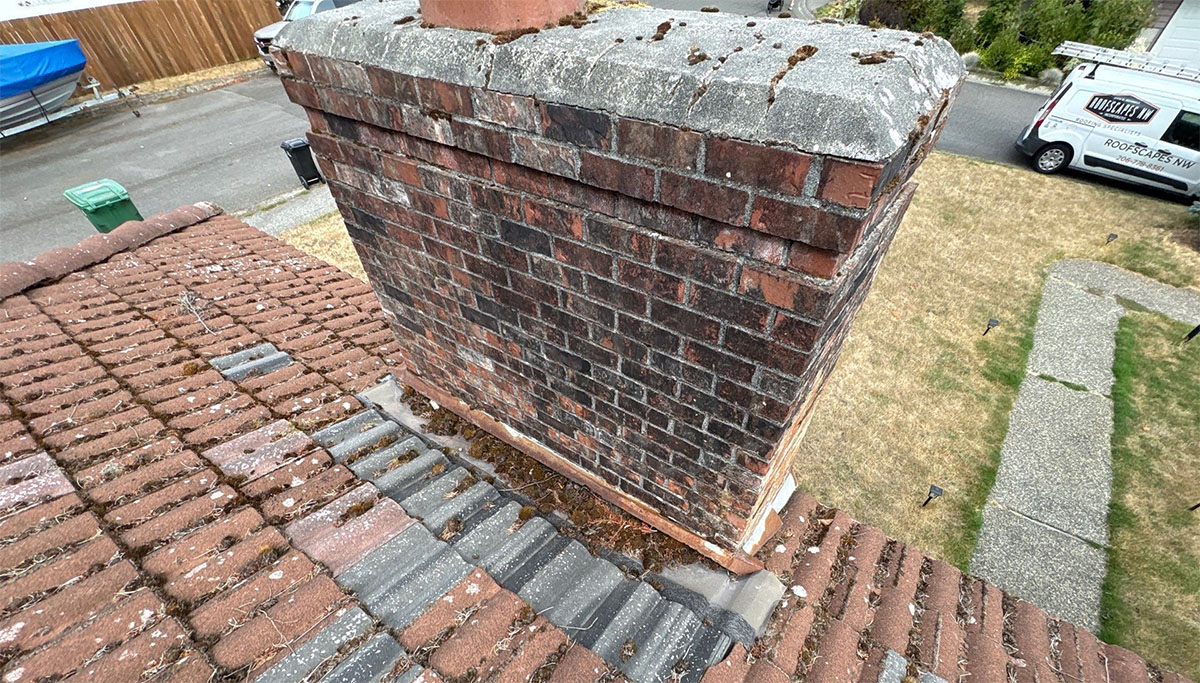
- Flashing Failure: Check the metal strips around your chimney and plumbing vents. Winter winds can pry these loose. If the flashing is gaping, water is pouring directly into your walls.
Gutter Health is Roof Health
Your gutters have been working overtime since November. By February, they are often filled with a heavy sludge of decomposing leaves, pine needles, and shingle grit.
If your gutters are clogged, water backs up. In our climate, this leads to fascia rot. The water wicks upward into the roof deck edge, causing the wood to turn to mush. If you see water spilling over the sides of your gutters during a rainshower, treat it as an emergency. It needs to be cleared immediately to protect the structural integrity of your roof edge.
Beating the “Spring Rush”
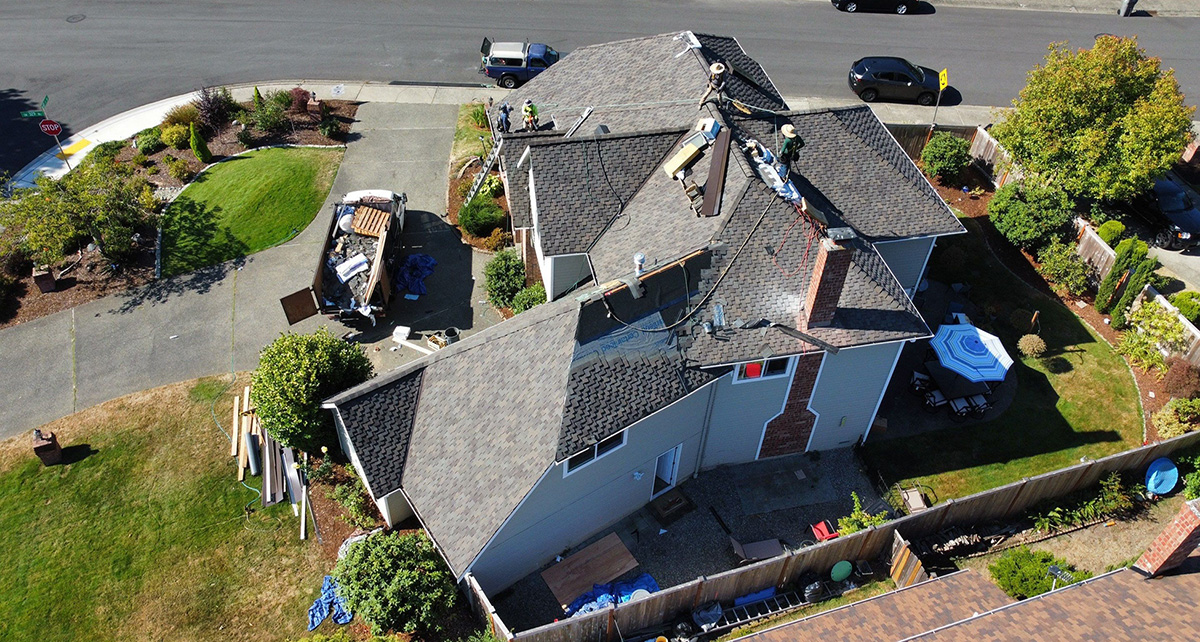
Here is an insider tip from the roofing industry: February is the smartest month to plan a roof replacement.
Once the sun comes out in earnest (usually late March or April), every homeowner in Washington suddenly realizes they need roof work. Phones ring off the hook, schedules fill up, and wait times increase.
By scheduling an inspection or replacement in February, you gain several advantages:
- Priority Scheduling: You are ahead of the panic rush.
- Damage Control: You fix winter leaks before the famous “April Showers” arrive.
- Financial Planning: Many homeowners use their tax refunds to invest in home value. Getting a quote now gives you the time to plan that investment wisely.
Repair vs. Replace: Making the Call
We know that a new roof is a significant investment. Our goal at Roofscapes NW is never to sell you something you don’t need.
When we inspect a home in Federal Way, Seattle, or the surrounding areas, we look at the “Total Health” of the system.
- If the roof is 12 years old and has some loose flashing? We repair it.
- If the roof is 22 years old, growing thick moss, losing granules, and has suffered wind damage? We will be honest about the diminishing returns of patching it.
We offer options ranging from budget-friendly architectural asphalt to lifetime metal roofing and synthetic slate, ensuring you have choices that fit your long-term plans for the home.
Local Trust, Family Values
The Pacific Northwest weather is unforgiving. It takes a toll on your home. You need a partner who understands the difference between a minor maintenance issue and a structural risk.
Roofscapes NW is family-owned, licensed, bonded, and insured. We live here, we work here, and we know exactly what a February sky means for your roof.
Don’t wait for the ceiling to drip.
Give yourself peace of mind for the rest of the rainy season. Contact us today to schedule your February Roof Assessment. Let’s make sure your home is ready for Spring.