If you have lived in the Pacific Northwest area for more than a year, you know that January is often the defining month for our weather. The holidays have passed, the days are still short, and the “gray” has firmly settled in. For residents from Federal Way to Seattle, this time of year brings a consistent mix of heavy rainfall, blustery windstorms, and the occasional freeze.
While we wrap ourselves in rain jackets and turn up the heat, our roofs are out there taking the brunt of the Pacific Northwest winter. It is typically during these weeks of sustained rain and wind that homeowners first notice problems. A dark spot on the ceiling, a shingle found on the lawn, or just a nagging worry about the age of the roof overhead.
At Roofscapes NW, we talk to hundreds of homeowners every winter who are stressed about their roofing systems. The most common question we hear is: “Is it too late to do anything about it?”
The short answer is: No.
Whether you are dealing with an urgent leak or wondering if you can replace a roof in the middle of a Washington winter, this guide is designed to give you peace of mind and clear answers.
The January Stress Test: What Our Weather Does to Your Roof
January in King and Pierce Counties acts as a stress test for residential and commercial roofing systems. It isn’t just the volume of rain; it’s the way the weather hits.
Wind-Driven Rain
In the summer, rain tends to fall vertically. In a winter storm coming off the Pacific Northwest, rain often falls sideways. High winds can lift loose shingles or drive moisture into vents and flashing details that might handle vertical rain just fine. This is why you might suddenly see a leak in a roof that seemed perfectly fine back in October.
Thermal Shock and Freeze-Thaw
While we don’t get the deep freezes of the Midwest, our temperature fluctuations can be tricky. We frequently hover around freezing at night and thaw during the day. Water that seeps into small cracks in your shingles or flashing expands when it freezes, widening those cracks over time.
Debris Accumulation
By January, all the leaves, pine needles, and branches that fell during the autumn storms have settled into valleys and gutters. If these haven’t been cleared, they act like a sponge, holding moisture against your roof shingles and preventing proper drainage.
Interior vs. Exterior: How to Spot Winter Roof Damage
You don’t need to climb a ladder in the rain to check on your roof – in fact, we strongly advise against it for safety reasons. Most serious winter roofing issues reveal themselves through signs you can spot from the ground or inside your home.
Inside the Home
- The “Attic Smell”: A musty, damp odor in your attic or upper floor often precedes visible water damage.
- Ceiling Spots: Look for yellow or brown rings on your drywall. Even a spot the size of a coin indicates water is making its way through the roofing system.
- Bubbling Paint: If paint near your ceiling or on the upper walls is bubbling or peeling, moisture is likely trapped behind it.
- Attic Condensation: Sometimes, what looks like a roof leak is actually poor ventilation. If warm, moist air from your home hits the cold underside of your roof deck, it turns into water. This is common in older Seattle homes but needs a professional eye to diagnose.
Outside the Home (Ground Level)
- Shingles in the Yard: After a windstorm, walk the perimeter of your house. Finding pieces of shingles (or whole shingles) means your roof’s wind resistance is compromised.
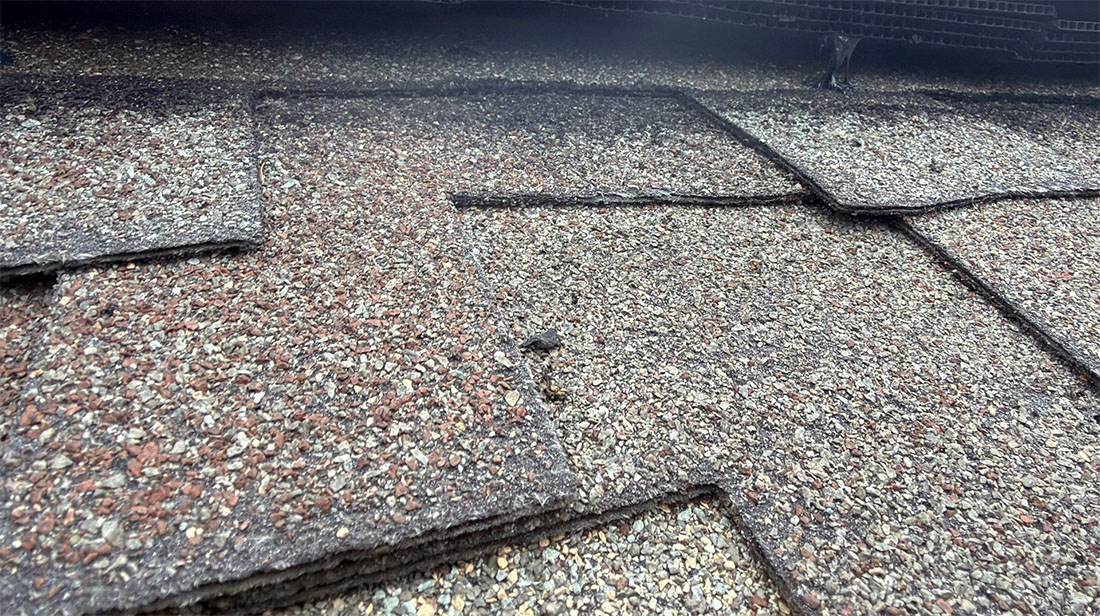
- Granule Loss: If your downspouts are pouring out black grit (granules from asphalt shingles), your roof is aging rapidly.
- Gutter Overflow: Water spilling over the sides of your gutters means they are clogged or pulling away from the fascia, which can rot your roof deck edges.
The Big Myth: “You Can’t Replace a Roof in Winter”
This is the biggest misconception in the roofing industry, and it causes many homeowners to live with buckets in their living rooms until June.
The Truth: You can replace a roof in winter in the Pacific Northwest. You just need a team that knows how to do it correctly.
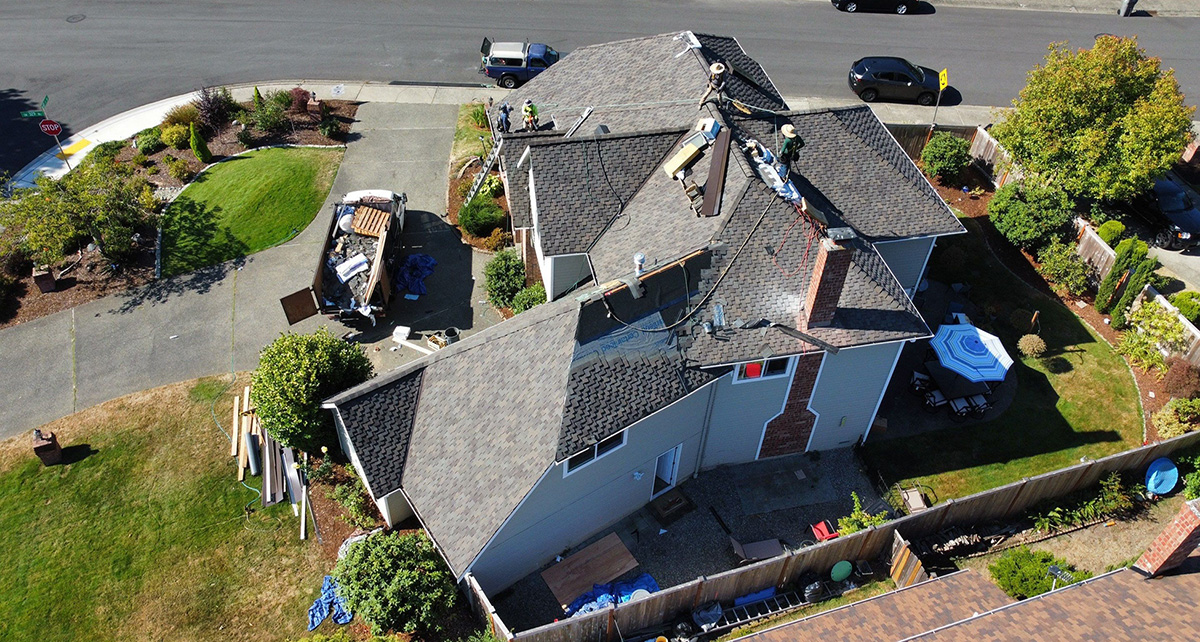
As a family-owned company that has operated in this region for years, Roofscapes NW has adapted our installation process to the local climate. We don’t shut down in January; we just change our tactics.
The “Dry Window” Strategy
We closely monitor hourly weather forecasts. We never tear off an entire roof in a rainstorm. Instead, we work in sections. We remove only what we can replace and seal back up within a dry window.
Synthetic Underlayment
Old-school tar paper wrinkles when wet and tears easily. We use high-performance synthetic underlayment that is water-resistant and provides a durable barrier immediately upon installation. Once this layer is down, your home is watertight, even before the shingles go on.
Safety and Cleanliness
Winter roofing requires extra care for property protection. We use tarps to protect landscaping from mud and debris, and our crews are trained in winter safety protocols to prevent slips and falls.
If your roof has failed, waiting for summer isn’t just inconvenient – it can lead to structural rot, mold growth, and damaged insulation. A winter replacement, performed by experienced locals, is a safe and viable option.
Emergency Steps: What to Do If You Find a Leak Now
If you wake up to water dripping from your ceiling this month, don’t panic. Here is a step-by-step plan to manage the situation until we can get there.
- Contain the Water: Place a bucket under the drip. If water is splashing, pin a piece of string to the ceiling spot and let the water travel down the string into the bucket.
- Relieve Pressure: If the drywall is bulging, it is holding a pool of water. Poke a small hole in the center of the bulge with a screwdriver to release the water into your bucket. This prevents the ceiling from collapsing.
- Clear the Area: Move furniture and electronics away from the leak.
- Call a Professional: Do not try to go up on the roof with a tarp during a storm. It is incredibly dangerous. Call Roofscapes NW. We offer emergency tarping services to stop the water entry immediately, buying you time to discuss a permanent repair or replacement.
Commercial and Multi-Unit Roofing in January
For our clients managing apartment complexes, HOAs, or commercial buildings in Federal Way and surrounding areas, January poses unique challenges, particularly for flat roofs (TPO or PVC).
Ponding water is the enemy of flat roofs. In January, drainage systems can easily get clogged with storm debris. If water sits on a flat roof for more than 48 hours, it can degrade the membrane seams.
For commercial property managers, we recommend:
- drain Inspections: Ensure scuppers and internal drains are free of leaves.
- Seam Checks: Winter winds can lift older membrane seams. A quick inspection can prevent a catastrophic failure during the next heavy rain.
The Moss Menace: A Winter Warning
You may notice moss glowing bright green on your roof right now. The wet, dark days of January are perfect for moss growth.
However, do not pressure wash your roof in winter.
Pressure washing can drive water under the shingles (especially when they are cold and brittle) and strip away the protective granules. January is the time for chemical treatment or gentle removal, not high-pressure blasting. If moss is a major concern, ask us about installing zinc strips or applying a treatment that kills the moss without damaging the roof integrity.
Why Local Matters for Winter Roofing
There is a reason why choosing a local, family-operated roofer matters more in the winter than any other season. National chains or storm-chasing companies often don’t understand the micro-climates of Seattle. They might not be prepared for the sudden shift from rain to freezing fog, or they might use materials that aren’t rated for our specific wind uplifts.
At Roofscapes NW, we live here. We know that a roof in West Seattle faces different salt-air challenges than a roof in the wooded areas of Federal Way. We treat every home as if our own neighbors were living in it – because often, they are.
Peace of Mind for the Rest of the Season
We still have a few months of winter weather ahead of us. If you are sleeping with one eye open every time a storm rolls in, it’s time to get answers.
You don’t have to commit to a full replacement today, but you should commit to knowing the condition of your roof. Whether it’s a minor repair to get you through the season or a full replacement to protect your investment for the next 30 years, honest information is your best tool.
Don’t let the January rain stress you out.
Contact Roofscapes NW today to schedule a comprehensive roof inspection. We will give you a clear, honest assessment of your roof’s health and help you keep your home warm and dry, no matter what the Washington weather throws our way.